July 27.2025
3 Minutes Read

How Tariffs and SBA Changes are Reshaping Small Business Sales Amid AI Innovation

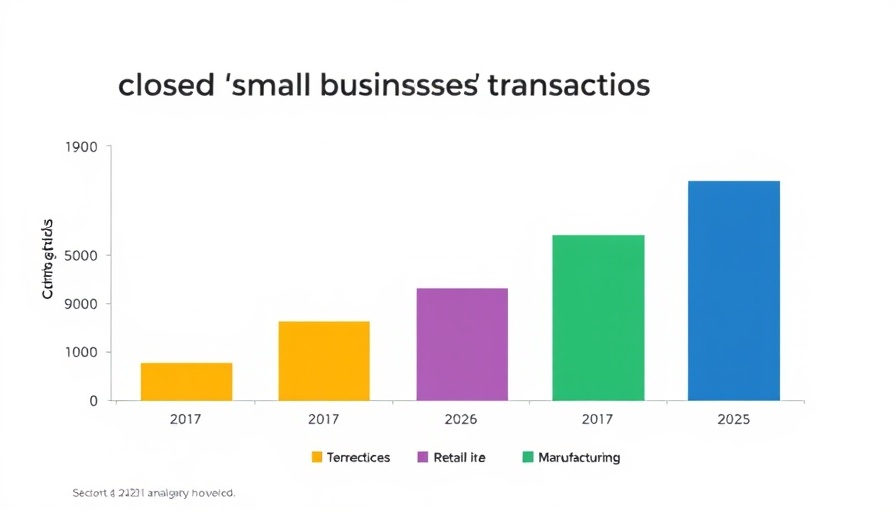
Bar chart of closed small business transactions 2017-2025.

The Current Landscape for Small Business Transactions

In recent months, small business owners have faced mounting challenges as they navigate a landscape complicated by tariffs and new Small Business Administration (SBA) regulations. According to the latest Q2 2025 Insight Report from BizBuySell, there was a 4% decline year-over-year in business-for-sale transactions. This reduction is particularly significant when compared to an impressive Q2 2024, reflecting a shift in buyer behavior marked by increased caution in the face of higher costs and changing lending conditions.

Understanding the Impacts of Tariffs

The landscape of small business sales is being heavily influenced by tariffs implemented by the Trump administration. These trade policies have injected uncertainty for businesses reliant on global supply chains. "The uncertainty around how tariffs will impact businesses that rely on imported products and how that affects the financial performance is causing buyers to hesitate," noted Dustin Zeher from Horizon Business Brokers, LLC. As nearly half of small business owners reported increased input costs due to these tariffs, many have turned to raising prices, creating a conflicting market dynamic as consumers react to these changes in spending power.

Shifting Buyer Preferences

Modern buyers are now gravitating towards smaller and less risky transactions, contributing to a decrease in total enterprise value in the small business market. This is evidenced by a 6% drop in median sale prices to $352,000, alongside a 2.6% decline in median cash flow. The trend reflects a careful reconsideration of value and risk, compounded by rising prices and inflation staying elevated for 55% of businesses.

Challenges in Small Business Financing

The recent changes in SBA rules have further complicated financing options for buyers and sellers alike. Effective June 1, new regulations restricted seller notes, requiring them to cover only 50% of a buyer's equity injection. Furthermore, any repayments on these notes are now on hold until the SBA loan is paid off. Stricter lending conditions have fundamentally shifted expectations between buyers and sellers, with only 23% of owners considering offering seller financing, compared to 62% of buyers who are anticipating it.

What This Means for Sellers and Buyers

This divergence in expectations among buyers and sellers—combined with the new SBA regulations—has caused deal closures to slow significantly. Business brokers report an increase in the average time items spend on the market by about 12 days, with 41% of brokers attributing this increase to the new SBA mandates. Owners retaining equity now face more stringent personal guarantees as well, complicating the bargaining landscape further.

Strategies to Navigate These Challenges

In this challenging environment, sellers can benefit from adjusting the structure of seller notes to support buyers' equity contributions while showing confidence in the market. Advisors suggest that securing prequalification and demonstrating financial readiness can help buyers navigate these waters more effectively.

Future Predictions: A Tech-Driven Approach to Small Business Sales

As technological advancements permeate all aspects of business, including transactions, the integration of AI solutions may offer new opportunities for both buyers and sellers. Utilizing AI marketing tools, video content strategies, and integrating automation practices can improve visibility and engagement, enhancing the likelihood of successful transactions. In an environment marred with uncertainty, leveraging technology could turn hurdles into innovative opportunities for those willing to adapt.

Concluding Insights

As we move through 2025, understanding the complexities of the current market is essential for both buyers and sellers in the small business arena. The interplay of tariffs, changing lending landscapes, and the rising adoption of technology are not just cyclical trends; they represent a significant transformation in how transactions occur. For those involved in small business sales, staying informed and adaptable is paramount.

Don’t let the current climate overshadow the potential for success in the small business sector. Whether you're in the market for a new venture or seeking to sell, now is the time to analyze the options available and harness innovative strategies to overcome the challenges presented by the market.

1. AI Fundamentals

2 Views

0 Comments

Write A Comment

*
*
Related Posts All Posts
12.12.2025

Unlocking Employee Potential: Workday and Sana's AI Dream Team

Update Revolutionizing Workforce Dynamics: Workday and Sana's Strategic Acquisition In a significant move that underscores the evolving landscape of workplace technology, Workday, a leader in enterprise AI solutions, has acquired Sana, known for its innovative knowledge management tools powered by artificial intelligence. This strategic partnership promises a new paradigm in employee experience, aiming to create what Workday calls the 'new front door for work.' Why This Acquisition Matters for Small Businesses As small businesses increasingly rely on advanced technologies to streamline operations, the integration of Sana's AI capabilities into Workday’s suite of solutions is poised to offer vital enhancements. With this acquisition, companies can expect a unified platform that simplifies workflows and decreases the need for employees to switch between applications constantly. Gerrit Kazmier, Workday’s president of product and technology, emphasizes this goal, stating that their approach will effectively connect systems, data, and essential actions, thus enhancing overall productivity and engagement across various departments. Understanding AI’s Role in Employee Productivity The potential of AI in transforming employee productivity is immense. According to a report, generative AI can not only automate routine tasks but also provide insights that improve decision-making, reduce errors, and optimize workflows. Small businesses using tools like Workday and Sana can expect to see substantial productivity gains by automating mundane activities, allowing their teams to focus on higher-value strategic initiatives. Enhancing Learning with AI: Sana Learn One of the pivotal features of the new platform will be 'Sana Learn', which combines data analytics with personalized learning management. This functionality is critical for small businesses aiming to develop a skilled workforce efficiently. By integrating learning with actionable insights, organizations can ensure their training programs align closely with operational demands, leading to better employee performance and retention. Navigating the Challenges of Transition While the acquisition heralds a new era of productivity tools, small business owners should prepare for the associated challenges. Transitioning to a new platform often involves costs—such as initial investments, employee training, and the integration of existing systems with new technologies. There are also legitimate concerns regarding data privacy, especially when dealing with sensitive employee information. However, the benefits of adopting such advanced tools—like increased operational efficiency and reduced manual labor—far outweigh the challenges, positioning firms to remain competitive in a digitally advancing market. What to Expect in the Coming Years Looking ahead, the integration of Workday and Sana's capabilities offers exciting prospects for enhanced employee morale and workflow efficiency. By 2026, businesses can anticipate a dramatic shift in how employees engage with their work, supported by AI-driven platforms that provide a more personalized and productive work experience. As noted by Joel Hellermark, CEO of Sana, this acquisition allows both companies to accelerate their vision of a seamless workplace environment, wherein knowledge is easily accessible, and repetitive tasks are minimized. Final Thoughts: Embrace the Future with AI With AI technologies increasingly shaping the future of work, it's crucial for small businesses to stay informed and adapt to these changes. The anticipated features from the Workday and Sana integration not only promise enhanced productivity but also paved the way for a smarter, more engaged workforce. Investing in these advanced tools offers a competitive advantage in the ever-evolving market. Fostering an environment that embraces innovation and continual learning is essential for thriving in the age of AI.

12.10.2025

Unlocking the Future with Google's Gemini 2.5 AI Tools for Developers

Update Harnessing the Power of AI with Google Gemini 2.5 Innovation and adaptability are crucial in today’s fast-paced business landscape. Google’s introduction of Gemini 2.5, along with powerful AI tools, offers small businesses the opportunity to enhance productivity and creativity. A Major Leap for Developers The Gemini 2.5 Computer Use model is set to revolutionize how developers create AI applications. Focused on improving user interactions, this model allows AI agents to autonomously perform tasks such as navigating websites and completing forms. Google representatives assert that the benchmark performance of Gemini 2.5 significantly outstrips alternatives, positioning it as a must-have for businesses that prioritize efficient customer interactions. AI Tools as Creative Catalysts In the realm of video creation, Google’s AI filmmaking tool, Flow, has been upgraded to deliver heightened creative control. This enhancement enables users to refine presentations with exceptional precision, allowing small businesses to produce professional-grade videos that can greatly improve their marketing effectiveness. The capability to generate integrated audio and manipulate character styles elevates the potential of visual storytelling, enabling even the smallest enterprises to engage their audiences more effectively. Vibe Coding: Lowering Barriers to App Development Another significant aspect of the Gemini update is the introduction of vibe coding in Google AI Studio, which simplifies app development for small business owners. By allowing users to describe their app ideas in layman's terms, Google’s AI takes care of backend processes, making it easier for non-technical entrepreneurs to explore technology solutions tailored to their business needs. Gemini Enterprise: Transforming Workplace AI Furthermore, the launch of Gemini Enterprise provides robust AI capabilities tailored to workplace dynamics. Integrating company-specific data ensures a unique and secure experience, which early adopters like HCA Healthcare have termed advantageous. The positive reports from these companies indicate that secure environments for building and governing AI agents can enhance daily operations across various sectors. Navigating Challenges of AI Implementation While Google’s innovations offer a wealth of opportunities, small business owners must also confront challenges, including the learning curve associated with new technologies and concerns surrounding data security and AI-generated content management. Integrating advanced tools requires thoughtful strategies to maintain control over brand narratives and ensure seamless operational transitions. Staying Competitive in the Evolving Marketplace As Google’s advanced AI tools gain traction, the competitive landscape for small businesses will inevitably shift. Companies that successfully integrate these technologies can expect streamlined operations, innovative marketing strategies, and improved customer engagement. Therefore, understanding both the benefits and potential pitfalls associated with AI solutions is essential for business leaders looking to thrive. The Future: Empowering Small Businesses with AI Ultimately, Google’s updated AI offerings present a compelling opportunity for small businesses to enhance efficiency and creativity. By embracing these technological advancements, entrepreneurs can better position themselves in an ever-evolving marketplace. To stay ahead, business leaders must remain informed about these rapid changes and leverage them to their advantage. As technology continues to advance, now is the time for small businesses to consider how they can harness the latest AI capabilities to increase their operational efficiency and creativity.

12.08.2025

Mastering Employee Training: 10 Strategies to Leverage AI and Engage Staff Effectively

Update Empowering Your Workforce: The Future of Employee Training In an era defined by rapid technological advancement, empowering employees through effective training and development is more critical than ever. As businesses seek to adapt to an evolving marketplace, integrating innovative training strategies that harness the power of technology like AI is essential. Implementing a structured and diverse training program fosters a skilled workforce capable of meeting contemporary challenges. 1. Identifying Training Needs with Precision Identifying training needs should begin with comprehensive skills gap analyses. These analyses juxtapose existing staff competencies against the skills required for future roles, enabling businesses to tailor training initiatives effectively. Engaging employees enhances this process, as 85% of employees report increased motivation when their development needs are acknowledged. Moreover, aligning training with tangible organizational goals necessitates collaboration between management and staff. 2. Enhancing Performance Through Data-Driven Insights A study by Energage highlights that top-performing companies leverage data to analyze staff performance continuously. Identifying performance gaps through regular assessments not only improves training programs but also elevates overall employee satisfaction. Feedback mechanisms, including employee surveys, are vital to fine-tuning these strategies and ensuring relevance in a fast-paced environment. 3. Realistic Goals: The Cornerstone of Success Setting realistic, measurable goals aligns training initiatives with both personal aspirations and business objectives. Research indicates that organizations with well-defined training goals see a 21% increase in employee productivity. Establishing benchmarks allows for ongoing assessment and adjustment, fostering an adaptive training culture. 4. Diverse Training Methods: Tailoring Learning Experiences Today's workforce is diverse, necessitating varied training methods. E-learning courses, simulation-based training, and even microlearning have emerged as essential tools for accommodating different learning styles. For instance, e-learning platforms facilitate asynchronous learning, allowing employees to grasp concepts at their own pace. This adaptability not only supports retention but also enhances employee engagement. 5. Aligning Training with Business Strategy To future-proof organizations, training must sync with company goals. Training strategies should promote skills that are immediately applicable while also preparing employees for anticipated industry shifts. By connecting training to broader business strategies, companies can cultivate a workforce adept at navigating change. 6. Employee Engagement: A Key Driver of Success Engaging employees in their own development is paramount. Companies that prioritize open communication report higher rates of employee retention. Inviting employees to co-create training agendas creates a sense of ownership that fosters a growth-oriented culture. Active listening to employee feedback not only improves training materials but demonstrates company commitment to employee growth. 7. Continuous Monitoring and Feedback Monitoring training outcomes is vital. Utilizing data analytics to track completion rates, employee satisfaction, and skill application helps gauge program effectiveness. Continuous feedback loops ensure that training programs are always evolving to meet employee and market needs. Sharing results with the workforce reinforces the importance of training and cements trust in the organization's commitment to development. 8. The Role of AI in Employee Training Artificial Intelligence (AI) is reshaping training paradigms. AI-driven platforms offer personalized learning experiences, adjusting content in real-time based on user interaction and progress. For instance, AI content curation can enhance e-learning platforms, ensuring employees receive tailor-made resources matching their unique training needs. Companies that incorporate AI not only enhance engagement but also streamline administrative aspects of training and development. 9. Emphasizing Long-term Growth: Mentorship and Advancement Creating pathways for professional development, including mentorship programs, equips employees with tools for success. By fostering relationships between experienced and new staff, companies cultivate a supportive environment that encourages knowledge sharing and career advancement, ultimately enhancing employee retention. 10. Future-Proofing Your Training Programs As market demands evolve, training must remain a priority. Implementing cyclical reviews of training programs ensures they stay relevant against industry standards and technologies. Ongoing professional development should not be viewed as a one-time initiative but a cultural pillar of the organization, driving both employee and business growth. In summary, as technology continues to evolve, effective employee training becomes foundational to business success. By identifying needs accurately, employing diverse methods, and leveraging AI, organizations can foster environments of continuous growth. The future lies in a skilled, engaged workforce that can swiftly adapt to changes, ensuring organizational resilience and long-term prosperity.

Terms of Service

Privacy Policy

Core Modal Title

Sorry, no results found

You Might Find These Articles Interesting

T
Please Check Your Email
We Will Be Following Up Shortly
*
*
*