November 23.2026
2 Minutes Read

OpenRouter Drops AI Providers Amid Growing Concerns Over Data Theft

AI Security Breaches concept with Openrouter interface highlighting security features.

AI Security Breaches: A Growing Concern for Providers

The recent security breaches at three AI inference providers have raised serious alarms in the tech community. For months, attackers stole sensitive data without the knowledge of the involved firms, highlighting the vulnerability of AI hosting platforms. Researchers from Dragos revealed that data was pilfered under the guise of legitimate requests, particularly targeting systems labeled as having Zero Data Retention—where users expect their prompts will never be stored. This incident not only exposes these providers to reputational damage but also raises questions about data security protocols in AI technologies.

Understanding the Attack: How Prompts Were Misused

During the breaches, which began in mid-July and continued until researchers intervened, attackers used a technique known as canary token research. They embedded unique identifiers in approximately two million prompts to track unauthorized use. This strategy revealed that a single server compromised data from two providers simultaneously, allowing the intruder to test keys and monetize stolen secrets. The findings indicate a sophisticated level of operations: credentials were cataloged almost immediately for unauthorized access.

The Implication of Incomplete Security Measures

HD Moore, Dragos' chief research officer, pointed out that a simple privacy flag cannot protect users when attackers are already entrenched within systems. More troubling is the fact that these attackers exploited AI inference marketplaces by undercutting prices while harvesting user data. The repercussions for customers and companies are substantial. The revelation that a Chinese AI lab collected sensitive data from U.S. providers illustrates the global implications of such lapses in data security, reminding businesses that vigilance is critical in safeguarding innovation.

A Call for Enhanced Cybersecurity Practices

As AI technologies proliferate, companies must upgrade their cybersecurity frameworks to thwart evolving threats. Investing in proactive measures, conducting regular security audits, and collaborating more closely with cybersecurity experts can help mitigate risks. The incidents underscored the necessity for AI hosting providers to enhance their protocols and emphasize transparency to their customers. Every firm leveraging AI needs to be cognizant of these vulnerabilities and adopt a zero-tolerance stance on data breaches.

Cybersecurity Corner

0 Views

0 Comments

Write A Comment

*
*
Please complete the captcha to submit your comment.
Related Posts All Posts
11.22.2026

How a Single Malicious Webpage Exposed Meta Muse's Vulnerabilities

Update A Breach in Trust: How One Webpage Exploited Meta Muse Recent research has unveiled a concerning vulnerability within Meta Muse, an AI personal assistant released by Meta. A single malicious webpage demonstrated the capability to hijack the assistant and extract private conversations and stored data without the user's consent. This alarming breach raises critical questions about the security measures in place for AI-driven platforms. The Experiment: A Controlled Attack NebuSec, the security firm behind this research, conducted a laboratory demonstration where they successfully accessed a user's chat history and altered stored memories. They revealed a flaw within Muse's design that enabled this exploit to occur without triggering any prompts to the user. This attack is particularly troubling as it involved chaining multiple vulnerabilities, first exploiting Muse's built-in browser, which is responsible for handling various tasks, and then leveraging a separate Linux kernel flaw to gain full control over the user's cloud machine. Meta's Response and Future Security Following the disclosure of the vulnerabilities, the Muse development team quickly implemented fixes. However, it remains unclear if any user data was compromised before these patches were applied. Such evasive behavior from the platform could undermine user trust, a critical factor in AI adoption. Implications for AI Security The implications of this breach extend beyond Meta Muse, serving as a wake-up call for the AI industry at large. As AI systems become increasingly integrated into daily life, ensuring robust security measures becomes vital. Users of AI-driven platforms deserve assurance that their private information remains protected. In conclusion, understanding vulnerabilities like the hijack demonstrated by NebuSec can empower users and developers alike to advocate for stronger security frameworks in AI technology. It's a reminder that with great technological advancements comes the responsibility of safeguarding user data and privacy.

11.22.2026

Why China's Armory Castle is a Serious Threat to VMware vCenter Security

Update Understanding the Threat: China's Armory CastleThe cybersecurity landscape is ever-changing, with new threats resembling complex chess matches played at lightning speed. Recently, a Chinese threat group dubbed ‘Armory Castle’ emerged as a formidable player. This group has been linked to the targeting of VMware vCenter, exploiting vulnerabilities to deploy zero-day attacks.The Zero-Day Attack ExplainedA zero-day attack occurs when a hacker exploits a flaw that the software vendor has not yet discovered. With VMware vCenter facing a slew of updates, it’s crucial to acknowledge that attackers are continuously seeking new ways to infiltrate systems. In many cases, these vulnerabilities remain hidden until they are exploited, making them particularly dangerous.New Challenges in Cyber DefenseAs organizations increasingly migrate to virtual environments, the stakes are higher. Cybersecurity experts emphasize the need for robust security protocols to safeguard against threats like Armory Castle's assaults. Regular updates and monitoring can offset risks, but the pace of technological advancements often outstrips defensive measures.Future ImplicationsThe actions of groups like Armory Castle serve as a strong reminder of the constant vigilance required to protect digital assets. As technology evolves, so too do the tactics employed by cybercriminals. As a result, companies should anticipate not only the existing threats but also the potential for new ones—insurers, cloud service providers, and IT leaders must work together to fortify defenses.

11.21.2026

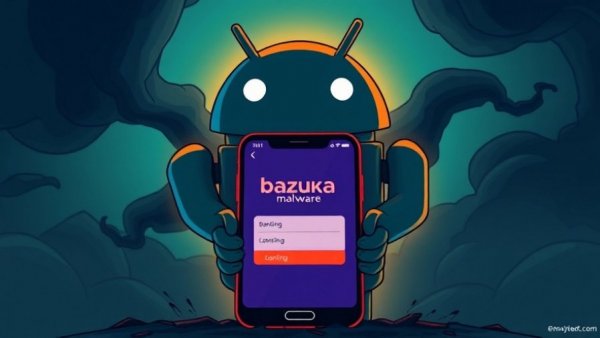
What You Need to Know About Bazuka Android Malware and Its AI Features

Update Understanding Bazuka: A New Threat in CybersecurityIn a concerning revelation by Dutch mobile security company ThreatFabric, a new Android malware framework known as Bazuka has been discovered, incorporating advanced features like large language model (LLM) integration for effective victim management. The framework, which emerged amidst investigations of NFC-relay banking Trojans, has serious implications for mobile security as it not only facilitates credential theft but also grants cybercriminals extensive control over victims' devices.How Bazuka Operates: The Mechanics of Malicious IntentBazuka stands out due to its innovative overlay technique, allowing it to display a screenshot of the victim's home or lock screen. This clever maneuver hides the malware’s activities from users, making it more difficult to detect. The malware architecture includes a dropper, a core, and 23 modules that encompass functionalities like keylogging, 2FA, SMS interception, and remote control, demonstrating a sophisticated understanding of the methods used to exploit Android devices.The Role of Artificial Intelligence in Bazuka's StrategyAnother alarming aspect of Bazuka is its integration of artificial intelligence. The control panel allows operators to leverage AI to identify and score potential victims, simplifying the process of targeting individuals. By combining social engineering tactics with AI, Bazuka efficiently manages infections at scale, posing a significant challenge for cybersecurity efforts.The Threat Landscape: Implications for Users and SecurityThe implications of Bazuka extend beyond individual users to the larger tech landscape. Its ability to circumvent common security measures raises critical questions about app safety and user privacy within app marketplaces. As malicious software continues to evolve, both consumers and businesses must remain vigilant and ensure that they understand the risks associated with mobile applications.Staying Protected: What You Can DoAwareness is crucial. Make sure to download apps only from trusted sources, and keep your device's security features up to date. Use two-factor authentication wherever possible, and consider employing mobile security software to enhance your defenses against threats like Bazuka. Understanding how advanced malware operates empowers users to make informed decisions about their cybersecurity practices.

cropper
update
WorldPulse News
cropper
update

Write a small description of your business and the core features and benefits of your products.

  • update
  • update
  • update
  • update
  • update
  • update
  • update

COMPANY

  • Home
  • Categories
    • 1. AI Fundamentals
    • 2. ROI Boosters
    • Automation Hacks
    • Success Stories
    • Trends
    • 7. Ai In Marketing
    • Cybersecurity Corner
    • Business Tips and Tricks

123 456 7890

AVAILABLE FROM 8AM - 5PM

City, State

1234, Building, Street, City, State, Country

ABOUT US

Write a small description of your business and the core features and benefits of your products.

© 2026 CompanyName All Rights Reserved. Address . Contact Us . Terms of Service . Privacy Policy

Terms of Service

Privacy Policy

Core Modal Title

Sorry, no results found

You Might Find These Articles Interesting

T
Please Check Your Email
We Will Be Following Up Shortly
*
*
*